Coaching


I try to bring a loving kindness to coaching.
It’s important that you know I’ve got your back, and also your heart.
I ask you to be shamelessly ambitious about what you want. Not it would be nice if, but rather: if you could wave a magic wand, what would be the dream outcome of our sessions together?
Conventional coaching looks forward: what's the challenge you're facing now, what do you need to do differently, who do you want to become? Therapy tends to look backward, what's happened in your past that’s shaping your present?
I’m trained in both. And what I’ve built over the years is a very good understanding of how the echoes from the past are sounding in the present and the future.
When you can see the reflection between how you were in your family of origin and how you are in the workplace — the work starts to be done. Because this realisation opens the way to change.
In practice, this means we work on two things in parallel.
One is pulling you forward; upskilling you in leadership and communication, getting you in tune with who you want to be and what you want to contribute.
The other is looking at what's holding you back; the internal personal dynamics, usually from upbringing and biography, that are quietly running the show.
Together we loosen the bonds to what holds you back; and strengthen your connection to what will carry you forwards.











How I work
Each Session
We start by creating a safe space for our work, setting goals, and agreeing ways to measure progress.
Every session, I'll ask: what's present for you? What do you want to leave today with? I keep a check on how that relates to your goals — but the best work is always the work you are ready to do at that time.
It's part conversation, part body work, part head, part heart, part mapping things out in the room or with visualisations, part forward-looking tools and models, and part looking back at what personal dynamics might be at play and how we can work with those. I work systemically, meaning that your personal goals always stay connected to the wider context: family, relationships, biography, culture - the wider systems you belong to that shape you as a unique person. This ensures that change can respectfully align with who you really are.
Between sessions
The people who do best are those who do things between sessions. There’s always something to try; journaling, a new tool, a moment to notice. Part of what we’re always doing is asking: what have you got coming up where you can actually test what we’re working on? What have you noticed since the last session? What have your learned? What can you differently? How can sessions support you better? Reflective feedback and adjustment is important.
Because unless you’re performing differently and feeling differently, what’s the point?
What to expect
We'll start with a 20-minute no-commitment chemistry call — a chance to ask questions and see how we get on before you decide to work with me.
From there, most people work with me over around 10 hourly sessions, one every 2-4 weeks. But there is no fixed amount: some people come for less time, others longer. We track objectives each session, with a deeper check-in at the midway point. My aim is to work with you not a moment longer than you need.
The work will follow your energy and readiness, not a straight-jacket plan. You’ll receive insights and experience to support change, and tools for self-learning and self-reflection. As soon as you’re good to go, you should be out there, in the real world, implementing change in your life, expressing yourself as you wish to be.
-
It varies more than you might expect.
Some people come because something's come off the rails — they've had to take time off, they're making mistakes, a performance review has flagged things requiring attention. Some come because of personal challenges: repetitive family conflict, a partner telling them they're working too much or that even when they're there, they're not really there, and general relationship issues.
Sometimes it's something positive — I love my work, I also love other things, and I don't know how to hold both.
And sometimes people come because of significant life events — a bereavement, a relationship breakup, leaving a job — where they just need a way of figuring out how to get through this period well.
There's not a hard line between any of those. There's not really a line at all.
-
Yes, definitely.
Many of my clients are referred by their employer, eg where a performance review has identified areas to work on or where a leader needs support for new challenges facing the business.
In these situations we have a three-way arrangement (you as client, me, employer as paying party..
The coaching space remains confidential but we have in place agreed processes to report back to the employer to ensure accountability.
-
No, definitely not!
My clients include lawyers, but also people in diverse kinds of helping professions: marketing, planning, transport, property, environment, and creative consultancies and public service — and people going through significant personal transitions that have nothing to do with their profession at all.
The common thread isn't the industry. It's the dynamic. If your work involves offering your expertise in service of someone else, the patterns that get activated tend to be quite similar, whatever your field. And if you're carrying something personal — a bereavement, a family rupture, a moment that's made you stop and ask bigger questions — that's a very good reason to get in touch.
-
I hold the highly respected Professional Certified Coach (PCC) accreditation with the International Coaching Federation (ICF), whose code of ethics I follow.
My certified coach training is all ICF accredited, in individual, leadership, team and organisational coaching.
I am also trained in systemic therapy with a specialism in systemic constellations. I'm on the teaching faculty of the Centre for Systemic Constellations, where I teach alongside senior psychotherapists, primarily to therapists who want to learn this approach.
I am trained in NLP (Master Practitioner Certification with Richard Bandler, the co-creator of NLP), meditation, and handling trauma.
I also run a busy and successful law practice — still leading teams, still in court, still on the coalface. Not only do I love my law work, I also feel it’s important to keep living and performing at the highest professional level and practising what I teach. This way my coaching remains grounded in practical reality and the challenges that my clients face. I have law degrees from both Cambridge (MA) and London (LLM) Universities and am a Bencher of the Honourable Society of the Middle Temple.
-
Yes, definitely. I think this is really important.
I am certified with the International Coaching Federation whose code of ethics I follow. My certification is renewed every three years, a process that involves independent assessment of coaching sessions, a three hour exam to test understanding of the coaching framework, and mentoring coaching.
For my therapeutic work I am a long-time member of a supervision group (comprising psychotherapists and coaches) run by the senior Gestalt Psychotherapist Judith Hemming. As part of my teaching work I receive support from senior therapists who are also members of the teaching faculty I belong to.
I engage my own ICF accredited coach for my own professional development, and engage in regular therapy myself. I view my own self-care as integral to the quality of service I bring to clients.
Below you’ll find podcast appearances and published articles on professional performance and personal dynamics.
-
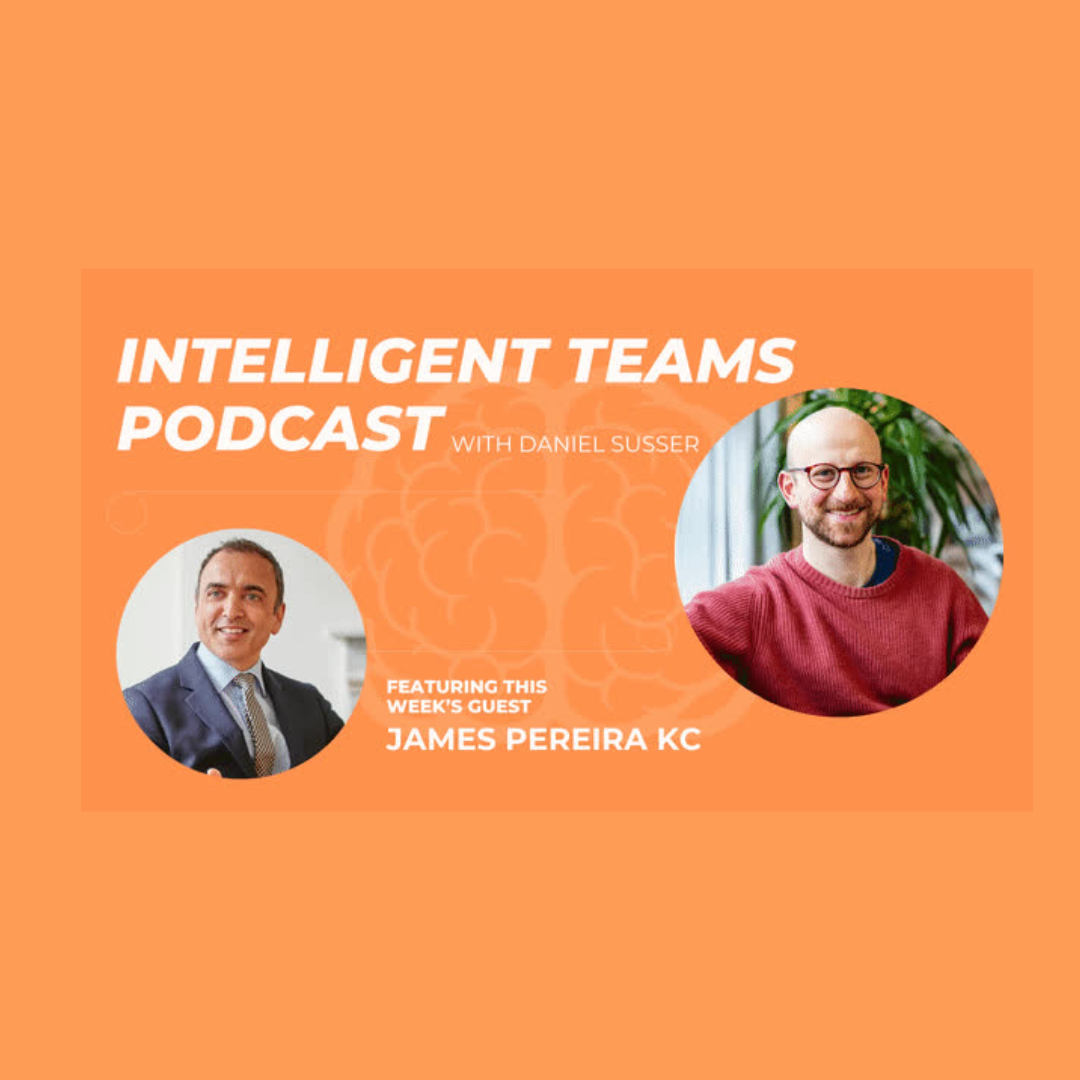
![Graphic for the 'Intelligent Teams Podcast' featuring host Daniel Susser and guest James Pereira KC, with a brain illustration background, on an orange background.]()
Want to know the why, what and how of what we do? Listen to this lively discussion with fellow coach Daniel Susser on the Intelligent Teams podcast
-
![People networking at a business event in a modern, well-lit space with large windows and indoor plants.]()
How to Create Gender Equity in the Workplace - James features on episode 4 of EY’s Strong When We Belong podcast hosted by EY UK&I Vice Chair Monica Bihar and recorded for International Women’s Day
-
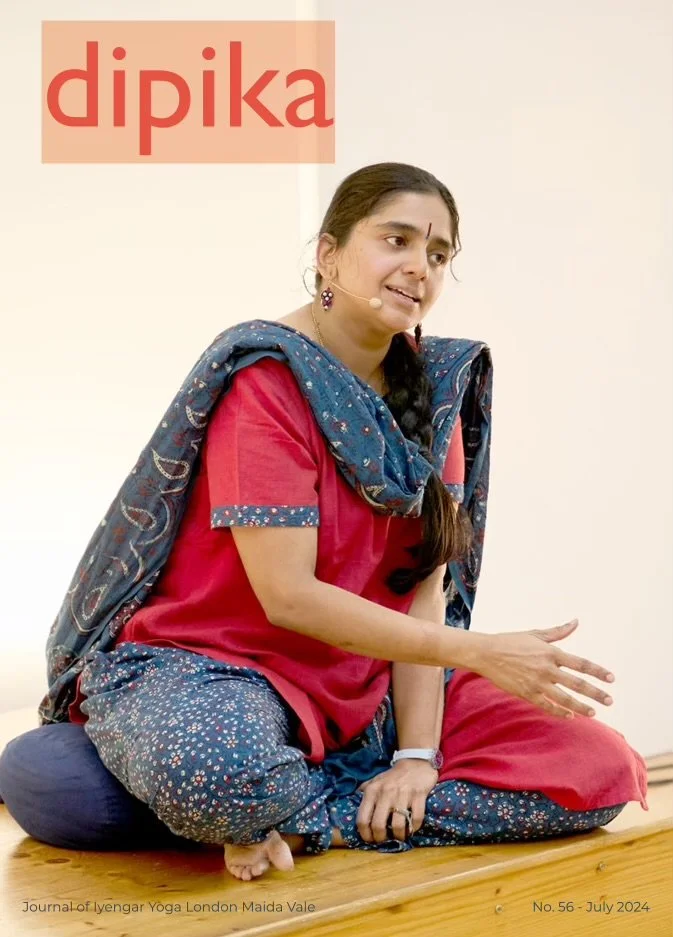
![A woman sitting cross-legged on a wooden floor, wearing a pink top with blue patterned pants and a matching blue shawl, speaking into a microphone headset. There is a title 'dipika' in red text at the top left corner, and smaller text at the bottom mentioning the Journal of Iyengar Yoga London Maida Vale, issue number 56 from July 2024.]()
-
![Colorful concentric circles in green, orange, blue, and black arranged in a spiral pattern.]()
-
![Colorful graphic with a brain icon and the text 'Wellbeing at the Bar' and 'Wellbeing Matters' on a background of vibrant geometric shapes.]()
Video feature on the Bar Council’s Wellbeing at the Bar Portal
-
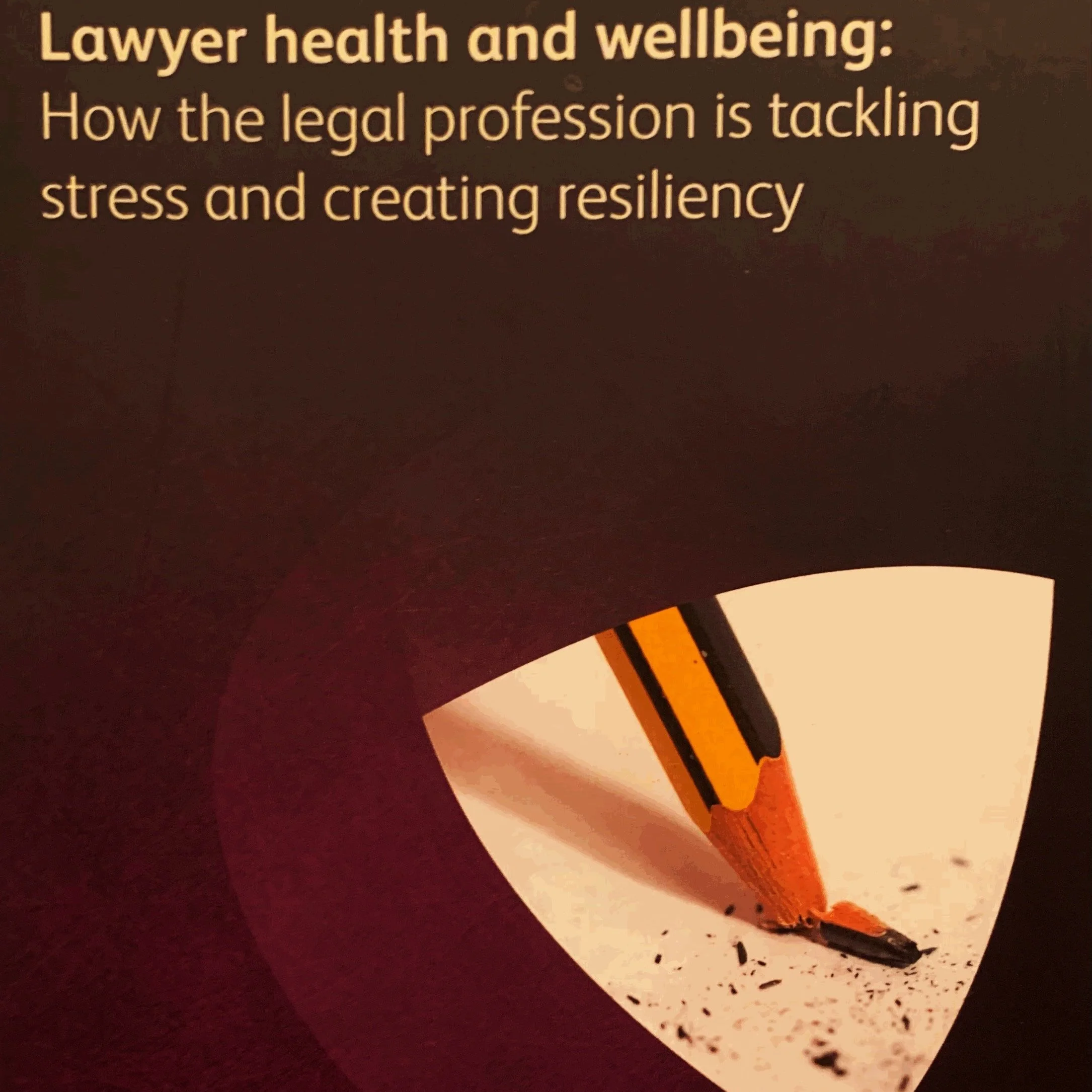
![Close-up of a book cover with the title 'Lawyer health and wellbeing: How the legal profession is tackling stress and creating resiliency' written in yellow on a dark background, and an orange and black illustration of a hammer at the bottom right.]()
Author of chapter on coaching for lawyers in the book “Lawyer Health and Wellbeing: how the legal profession is tackling stress and creating resiliency” (Ark Group, 2020)